

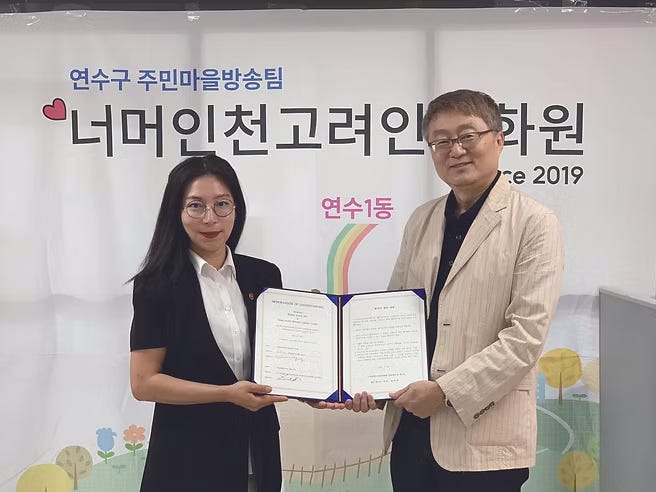
Walden Korea signed a business agreement with the Korea Support Center and the Koryo People’s Cultural Center “Beyond Incheon,” located in Hambak Village in Yeonsu-gu, Incheon, South Korea. The agreement is intended to promote the history of Primorsky, Manchuria, and the Korean Peninsula to a global audience. Hambak Village is described as Korea’s largest concentrated ethnic village, where approximately 7,000 Koryo (Goryeo) people live together as a community.
The term “Koryo people” (Goryeo people) refers to ethnic Koreans who have lived across the post Soviet region, including Uzbekistan, Russia, Kazakhstan, Kyrgyzstan, and Ukraine, particularly following the collapse of the former Soviet Union.
In spring 2019, marking the 100th anniversary of the March 1st Independence Movement and the establishment of the Korean Provisional Government, President Moon Jae-in visited Uzbekistan and stated that the first generation of Koryo people were independence activists and patriots.
Historically, in 1863, Koreans who crossed the Tumen River and settled in Primorsky Krai formed Korean villages that later became central sites of the independence movement, including serving as a base for armed resistance. That trajectory was disrupted in 1937, when forced deportations to Central Asia devastated the community. Tens of thousands of Koryo people reportedly died during the relocation and in its aftermath. Those who survived rebuilt their lives in Central Asia, cultivating barren land, establishing collective farms, and sustaining their communities while educating the next generation. Following the collapse of the Soviet Union, many Koryo people dispersed across Eurasia, and some later migrated to South Korea, including through pathways that expanded after 2007.
Despite their historical connection to the independence movement, many Koryo people in South Korea face significant barriers to recognition, educational opportunity, and social integration. In contrast to ethnic Koreans from China (Joseonjok), many Koryo people are not fluent in Korean, in part because Korean-language instruction was banned in the Soviet Union after 1945. As a result, many have remained concentrated in residential enclaves such as Hambak Village, where language access and community support are more readily available.
Many Koryo people who resettled in South Korea were highly educated professionals in their former countries, including doctors and professors. However, after arriving in Korea, many encountered limited pathways for professional recognition and employment, and were often funneled into low-wage work.
As part of its related programming, Walden Korea plans to launch a modern Korean history study trip that brings second-generation Korean students and U.S. residents to South Korea. The itinerary will include visits to a Koryo community where participants can meet descendants of anti-Japanese independence activists and learn more about the Korean diaspora. Participants will also visit the Demilitarized Zone (DMZ) to study inter-Korean relations and will include a learning component on the Jeju 4·3 Massacre.