

BROOKLINE, Massachusetts | April 19, 2025
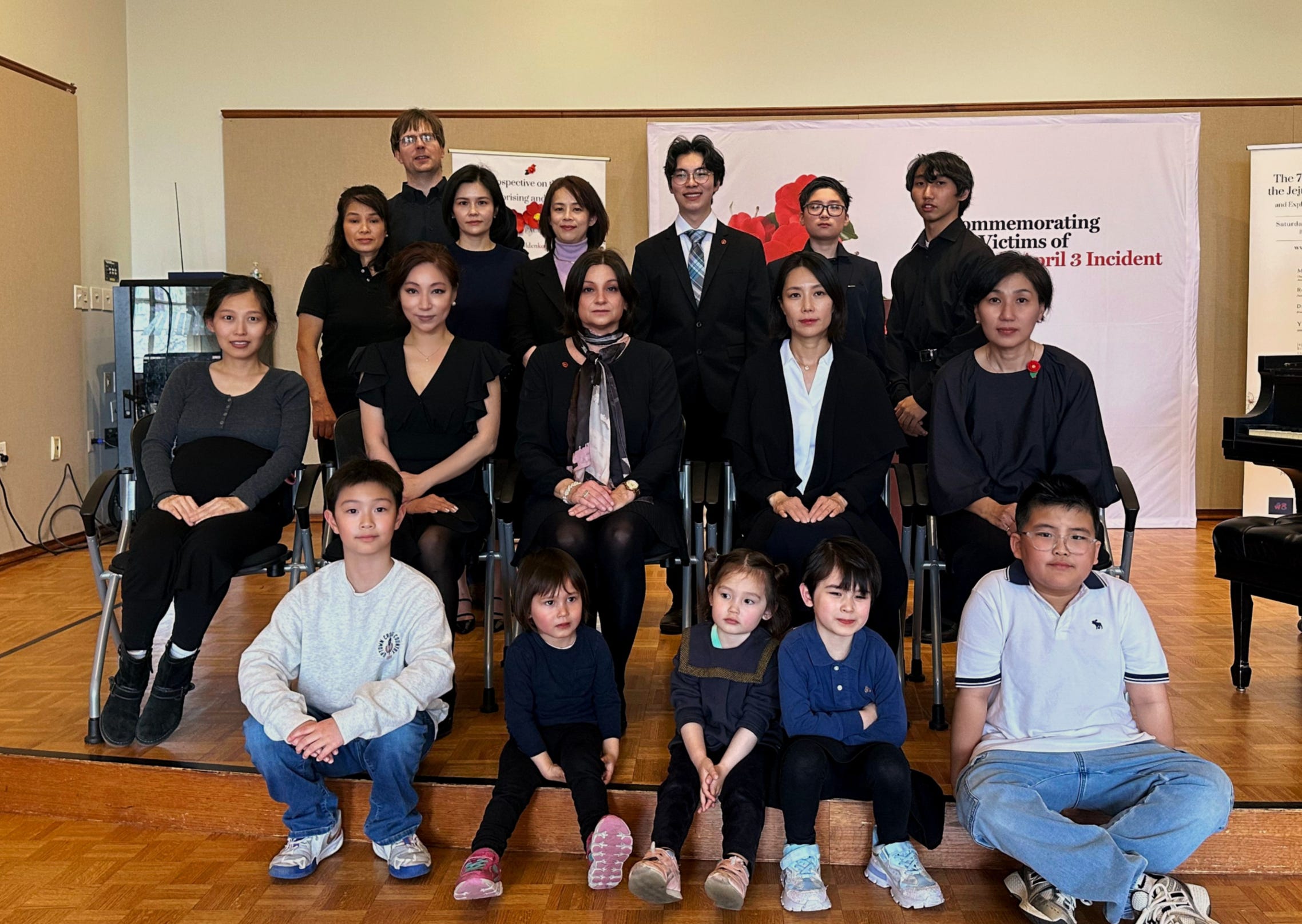
The 77th Anniversary Memorial for the Victims of Jeju 4·3 was held on April 19 at Hunneman Hall in Brookline, Massachusetts. The event was convened to share the truth of Jeju 4·3 with the global public and to amplify a message of justice, human rights, and peace.
Hosted by the Jeju 4·3 Memorial and Families Association of the U.S. and its Memorial Committee, chaired by Suyeon Yang, the annual memorial marked the recent inscription of Jeju 4·3 records on UNESCO’s Memory of the World Register. The gathering also served as the organization’s first public step toward formally advancing a Jeju 4·3 resolution in the U.S. Congress.
Jeju 4·3 and the UNESCO inscription
The Jeju 4·3 Incident refers to mass civilian killings and related state violence that occurred on Jeju Island from 1947 to 1954. An estimated 30,000 civilians were killed during suppression operations carried out by South Korean authorities during the period of the U.S. Army Military Government in Korea.
In April, UNESCO inscribed Jeju 4·3 records in its Memory of the World Register. The newly inscribed materials total 14,673 items and include lists of prisoners from illegal military trials, postcards from prisons, testimonies from victims and bereaved families, civil society records, and official government investigation reports.
Memorial remarks and the congressional resolution initiative
The memorial was emceed by Hyunjung Lee, a Walden Korea committee member. In her commemorative address, Chairwoman Suyeon Yang emphasized that Jeju 4·3 must be remembered not only as a regional history of Korea, but as a global human rights story that demands ethical attention. She noted that the community has moved beyond an era of silence and is now rewriting the historical record through documentation and testimony. She further described the memorial as the first international commemoration held after the UNESCO inscription and called for U.S. society to engage this history with a shared sense of responsibility.
Video messages of solidarity were delivered by Changbeom Kim, Chair of the Jeju Bereaved Families Association, Kwanghyun Oh, Chair of the Jeju 4·3 Bereaved Families Association in Japan, and Jeju Special Self Governing Province Governor Younghoon Oh.
Catherine Yang, based in Washington, D.C., presented the purpose and significance of the proposed congressional resolution. She underscored that the resolution is not solely about assigning responsibility for the past, but about renewing an international commitment to human rights and democracy going forward. The draft resolution, prepared by the Jeju 4·3 Victims and Families Association in the U.S., includes acknowledgement of the historical context of U.S. involvement during the US military government period, requests for disclosure of relevant records, and an expression of solidarity with survivors and bereaved families.
Passing memory to the next generation
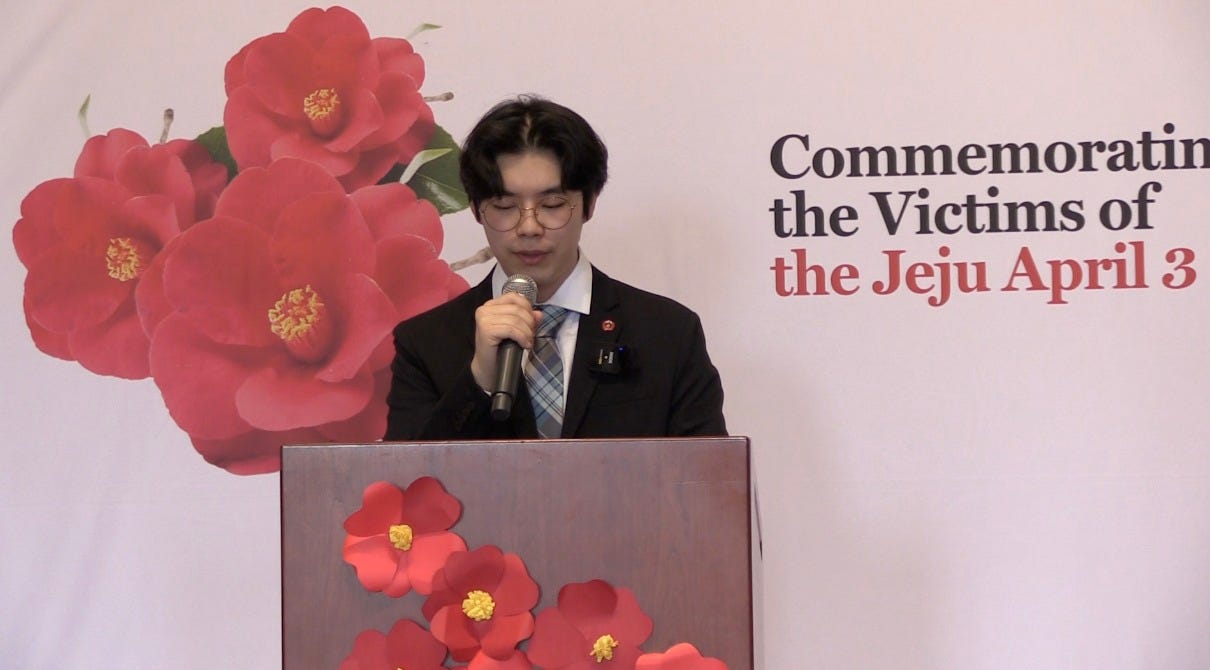
A highlight of the program was a speech by Joseph Choi (Jaeyoon Choi), a ninth grade student at Bedford High School and a second generation Korean American. Beginning with the question, “Why am I only learning this history now,” he offered a reflection on silence, memory, and solidarity, and emphasized that what his generation can do begins with listening.
Language, art, and healing
Professor Diana Lynch of Boston University, a poet and scholar, spoke on the role of language in confronting suffering and opening a space for healing. She described Jeju 4·3 as an event that must be held in poetic and ethical memory, and stressed the responsibility of speaking against silence.
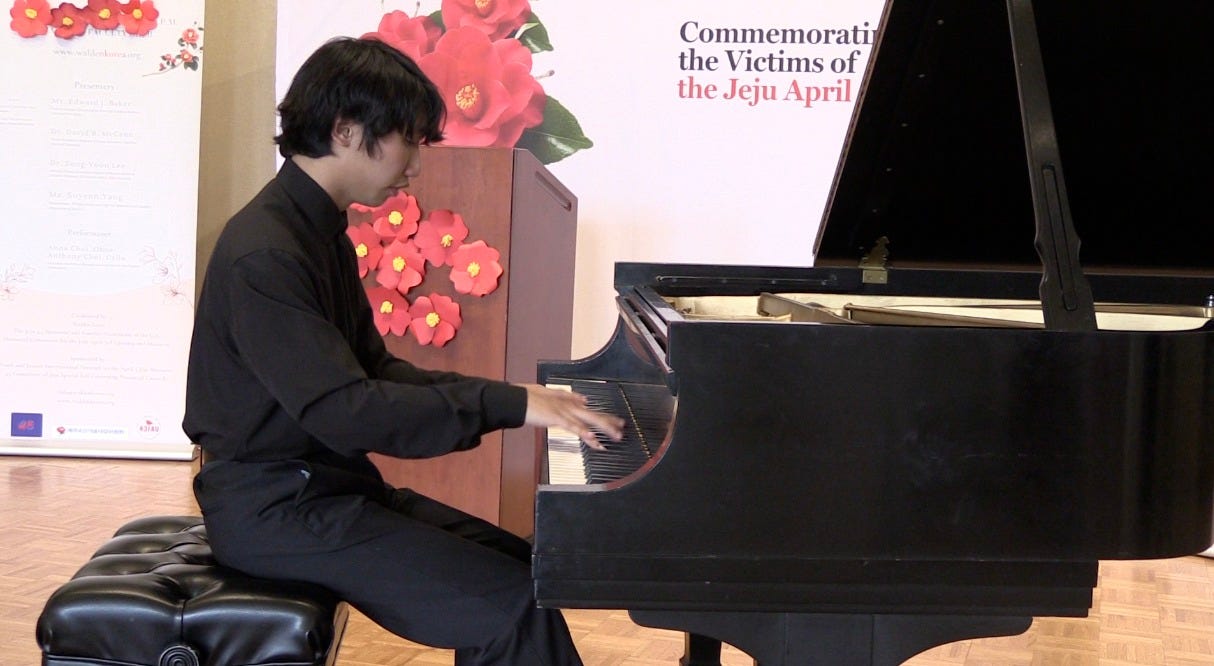
The memorial also featured performances that carried the themes of remembrance and repair. Pianist Benjamin Choi performed Janáček’s Sonata 1.X.1905 (From the Street), Evoking a sense of grief and suppressed emotion and illustrating the capacity of music to hold memory. Child singer Hazel Cho performed “Camellia’s Dream,” followed by Chairwoman Suyeon Yang’s concluding tribute song accompanied by Jeju 4·3 video images.
Ongoing work and public access
The Jeju 4·3 Victims and Families Association of the U.S. continues human rights education and arts based public programming through Walden Korea, and engages in community service and cultural exchange in partnership with the civic arts group The Scent of Camellia, led by Hyejung Lee.
The full video of the 77th Anniversary Jeju 4·3 Memorial in the United States will be available beginning in the fourth week of May, after final production, at:
Korean: www.43jeju.com
English: www.waldenkorea.org
Membership in the Jeju 4·3 Memorial and Families Association of the U.S. and its Memorial Committee is open to all, including those who are not bereaved family members. Those who wish to join the work of truth seeking and historical remembrance may submit a membership form online. There is no membership fee.
Media Contact
Jeju 4·3 Victims and Families Association of the U.S. and Memorial Committee
Website: